
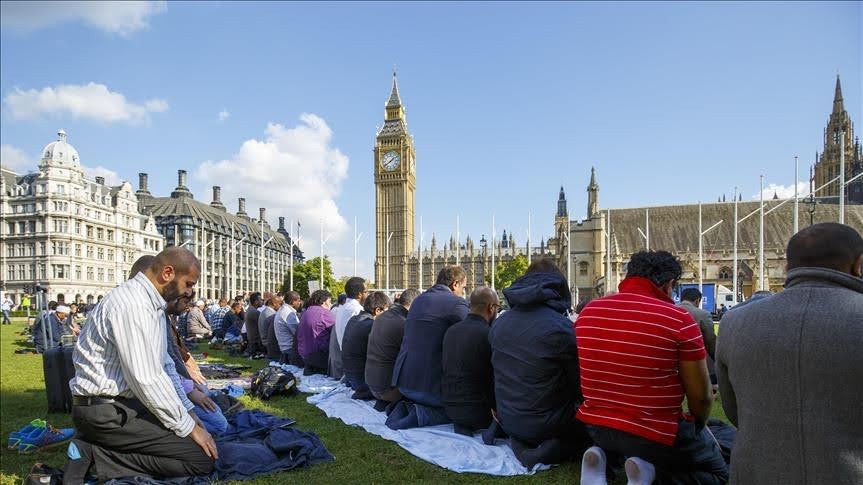
Following the years of Enlightenment, Christianity largely became a mythology in Europe.
We became “Culture Christians”, and religious doctrine and faith became something subdued, and “something you can do in your spare time”.
European politicians never mention God, and there are no Bibles in courtrooms.
In the 1970s we began to import labourers from Turkey, Balkan and the Middle East – most of them Muslim, and most of them from rural areas with low income and substandard education.
Later more labourers and even refugees started coming in from Africa and the Middle East, and certain laws were adjusted to accommodate people with a different religion and religious mindset.
Today the percentage of Muslims in Europe constitutes on average 5.6% (for comparison: 1.3% in North America, 27% in Asia, 45% in Africa, and 0.1% in Latin America).
Some of them – but far from all – came with traditions for social control: a concept Europeans had worked hard to abolish for decades.
In Europe equality, personal freedom, and freedom of expression is towering far above faith, culture, national identity, loyalty, and tradition.
This has created some tensions, and some (very few) Muslim hardliners have even started agitating for Sharia law in Europe, for certain groups or areas.
It’s not so much a friction between Islam and Christianity, but more regularly a friction between (Muslim) theism and secularism.
On the personal level, questions arised, such as “is the constitution above or below the laws stipulated by God (Allah) the almighty?”
To a de facto atheist the answer is very simply “above”, but to people believing in an almighty creator it’s not as straight forward.
The willingness to entertain such conversations has led the far right to claim Europe is on its knees for Islam.
Simultaneously, attention is being directed toward high crime rates and extremist recruitment in neighborhoods with high concentration of Muslims.
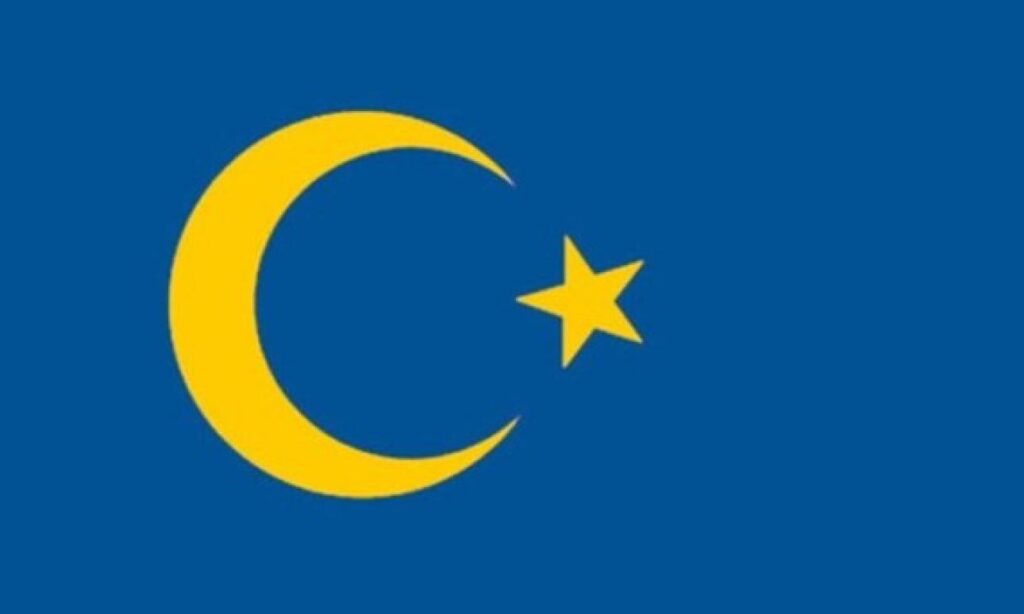
It’s not unusual to see the Swedish flag satirised online with the cross substituted with the Islamic crescent moon, by the far right.
The question “is it really that bad?” arises.
In selected suburban areas, near certain cities, there are large concentrations of people who will maintain a culture that is foreign to general European values, and in these areas the often substandard education and low income levels has even fueled rather high crime rates.
Focusing on these areas will generate the reply “it’s not just that bad – it’s in fact much worse”.
Reading the news in the centre of the city, other suburbs, or in the countryside, where there is a very low density of (mainly well assimilated) Muslim immigrants, it looks even more frightening – when you can’t see it, it grows on you.
But when you do the helicopter view, and look at society as a whole, the impact is limited – borderlining non-existent.
Even in Sweden, which has the highest concentration of Muslims in all of Europe (9.8%), most Swedes’ everyday lives are not really impacted by Muslim immigrants at all. But that doesn’t mean that the conversation doesn’t often turn to the topic, and therefore it occupies more of their consciousness than their practical everyday lives.
In short: There is a problem, in some places a big problem, but it is not as impactful on society, as a whole, as we think.
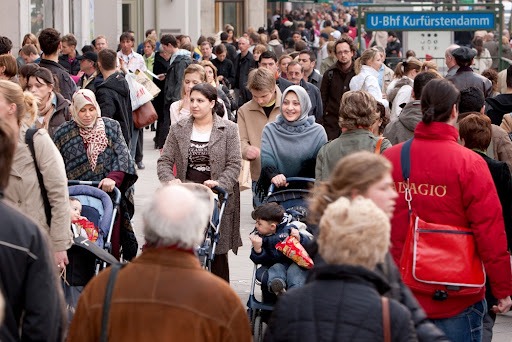
Yes, you see a group of Muslim people on the street and cognitive links run wild (“what if they are criminals or even terrorists?”), but in reality: How much does this practically affect our lives? In reality, to the vast majority: not at all.
The cognitive links are fueled by popular movies, news from warzones and terrorist attacks – completely unrelated to this group, waiting for the bus.
In recent years European governments have become increasingly aware of the actual issues that arise. Especially for the second and third generation of immigrants, as some of them experience how their everyday life differs significantly from their native classmates, and family expectations and limitations are very different.
Their non-European upbringing, and cultural conservatism combined with cultural isolation, means that the problems seemingly do not diminish over time.
Laws are being enforced to streamline society. In some European countries the Niqāb and Burka has been outlawed, and in most European countries genital mutilation of girls carries a long prison sentence (even if the procedure is performed abroad).
Authoritarian family dynamics (high levels of domestic surveillance) will in some European countries lead to the children being taken into care by social authorities.
The penalty for street crime is being increased, especially if the crime is gang-related, and if the criminal is a citizen of a country outside the EU, it will often result in deportation.
The penalty framework for the types of crime committed almost exclusively by native citizens has not been adjusted to the same extent.
The former Danish Queen framed it this way, in a televised New Year address: “We are used to people coming to Denmark automatically becoming Danish, after riding the Danish buses and drinking the Danish tap water for a few years. That is not the case anymore.”
She’s not a politician, and only expressing what she – and a growing part of the population – has observed: Dutch immigrants in Denmark become Danish within a few years and start speaking Danish at home. Turkish immigrants do not.
Politicians are trying to balance two ideals with legislation: Religious freedom on one hand, and on the other hand making their countries undesirable to settle in (or stay in) for people with culture conservative Islamic ideals.
The law is the same for everyone, so the laws are becoming more and more specific to target certain types of Muslims and not interfere with local traditions and indigenous minorities.
One example: In Denmark it’s common to shake hands at official events. In some Muslim groups it’s inappropriate for women to shake hands (or in any other way touch) a stranger – especially a man outside the family. So in Denmark the law now stipulates that shaking the mayor’s hand is a part of the ritual when you gain citizenship. No handshake = no citizenship.
Prior to this final test, you have to pass some other tests that proves your language skills, and your understanding of Danish history, culture, and law. Tests that most native Danes would struggle hard to pass.
Most of the issues with the Muslim minority population are imagined, and often fabricated for the impact of exaggeration.
Some issues are statistically indisputable, and some are open questions.
In crime statistics Muslims have an index 130 (meaning 30% more crime compared with the population as a whole) in many European countries. There can be several socio-economic factors at play, and it’s definitely not religiously founded (the Quran doesn’t actually teach you to steal or sell drugs). The question is if crime preventative measures, or the effect of harder punishment, or a combination of the two, is the right way to tackle the problem.
Typically the left wing is in favour of prevention, while the right wing is in favour of harder punishment.
The typical Middle Eastern type of upbringing, where (harmless) small children are allowed more freedom, and the grip is tightened as they get older (and can potentially do real harm), is the opposite of the typical native European approach, where small children are constantly monitored and corrected, but gain more freedom as they get into their teens, in order to prepare them for total autonomy in adulthood.
To many native Europeans, many Muslim children are perceived as undisciplined and ill-mannered, while the teenagers – especially girls – are perceived as oppressed (basically hostages to their male or older relatives).
It can be expressed like this: in which ages (new born to young adult) should parents exercise which level of social control: from zero to 100 or from 100 to zero?
In many Muslim communities, leaving the faith is socially difficult (apostasy). Therefore, when a Muslim marries a Christian in Europe, the couple often chooses a secular (civil) marriage or the Christian (secular) partner converts to Islam, rather than the Muslim partner converting to Christianity. Converts to Islam for marriage make up an estimated 1% of the Muslim population in Europe.
This imbalance is seen by some Europeans as a problem.
Muslims in Europe generally have more children than Christians. However, the gap is much smaller than popular myths often suggest, and it’s actively shrinking as birth rates for all groups in Europe fall.
The average number of children per woman (Total Fertility Rate or TFR) varies by religious affiliation. While both groups are often below the “replacement level” (2.1 children per woman needed to keep a population stable), Muslims typically have a higher average of approximately 2.6 children per woman, while Non-Muslim (including Christian/Secular) average approximately 1.6 children per woman.
Again, this is driving the perception that Muslims are slowly outgrowing the native European population.
However, the “Majority” threshold is hard to reach: to reach a Muslim 51% majority, several things would have to happen that contradict current sociological knowledge.
The “Convergence” Rule: As Muslim families stay in Europe for 2–3 generations, their birth rates drop to match the local average. The “zero to 100” social control often weakens in a secular environment, leading to smaller families.
Secularization: Just as Europe “de-Christianized,” many children of Muslim immigrants in Europe are becoming “culturally Muslim” but non-practicing or secular.
The Math of Scale: There are roughly 450–500 million people in the EU. The Muslim population is roughly 25–30 million. To flip that ratio, you would need hundreds of millions of new arrivals or a birth rate that is biologically nearly impossible.
Now it may seem like the message on the wall is this: “Muslims are a problem in Europe, but not as big a problem as feared.”
There’s a little more to the story.
Muslim immigrants have provided a much needed workforce, especially in industry and service sectors – and some even with high expertise, broadened the cultural horizons for Europeans, had a positive impact on cuisine and couture (fancy words for food and fashion), and given us a chance to reevaluate – and value – our own customs and mindsets.
Mainly after the atrocities during World War II, where millions of religious minority citizens were killed on an industrial scale, we developed an open mind, acceptance, and humanistic approach that needed to be tested and adjusted, to build a framework for a society that can deal with changes and challenges in the future.
In the process we discovered a few fun facts about ourselves. “Can we simply outlaw the hijab to force them to look more native European?” – Well, actually, there are quite a few native minorities that wear a scarf very like the hijab. It would be hard to make such a legislation.
But the days where laws would be altered to accommodate migrant religions are long gone, while the laws to discourage them are a work in progress.
The question is if Islam itself will develop in Europe into a Euro-Islam, as a result of the secular societal pressure and laws.
It is said that pressure breeds counter-pressure, and in small groups this is clearly seen in these years, but in the Balkans, which for many years were under communist (secular) rule, and culturally far more European than Middle Eastern, the vast majority of Muslims were transformed into a group who largely ignored apostasy, alcohol prohibition, and other “non-European” parts of Islam. Presumably the same that would have happened if the Ottoman empire had triumphed and turned all of Europe Muslim.
And the same that happened to Christianity in Europe: culture changes religions far more than the other way around. If you have doubts, compare a British Christian to a Texan Christian and a Middle Eastern Christian, and you will see three completely different religions.
According to some right wing influencers Muslims will make up about 10% of the European population in 2050. But maybe they will only be “10% Muslim” when this happens?